

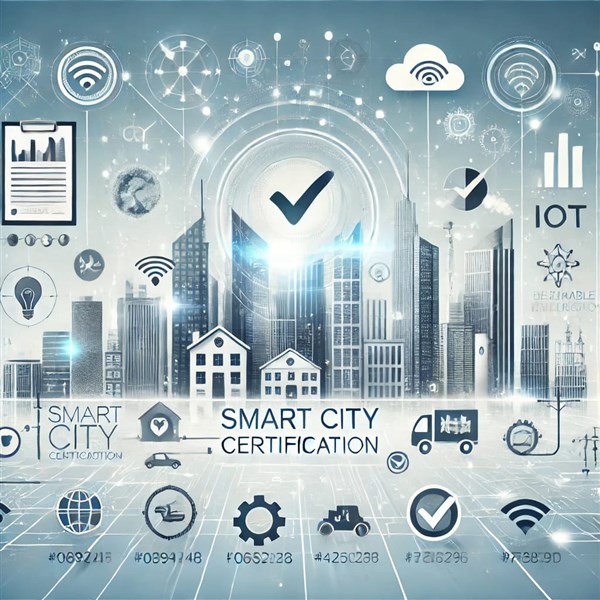
As cities around the globe evolve to meet the demands of the 21st century, a common goal unites them: becoming smarter, more sustainable, and more citizen-centric. Enter the concept of Smart Cities — urban areas that leverage digital technologies, data-driven insights, and sustainable practices to improve quality of life and operational efficiency.
But how do we measure how "smart" a city is? How do urban planners, governments, and citizens know if their city is truly using technology to its fullest potential?
That’s where Smart City Certification comes in.
This blog is a complete beginner’s guide to understanding what Smart City Certification is, how it works, why it matters, and how cities around the world are using it to drive innovation, transparency, and sustainable urban growth.
🌐 What is a Smart City?
Before diving into certification, let’s quickly revisit what a Smart City means.
A Smart City is an urban area that integrates information and communication technologies (ICT) and Internet of Things (IoT) solutions to optimize city functions and improve the well-being of its citizens. This includes areas like:
- Smart traffic management
- Digital healthcare
- Smart lighting and energy grids
- Waste management
- Real-time crime monitoring
- Citizen engagement platforms
The ultimate goal is to use technology and data to create efficient, livable, and sustainable cities.
📜 What is Smart City Certification?
Smart City Certification is a formal recognition or evaluation process that measures a city’s progress and performance against specific standards, frameworks, or criteria related to smart city development.
It provides:
- A benchmark: to evaluate the effectiveness of smart initiatives.
- A roadmap: for continuous improvement in urban systems.
- Recognition: from global organizations, boosting a city’s reputation.
- Transparency: that builds trust among citizens, investors, and stakeholders.
Think of it as the ISO or LEED certification equivalent for smart urban ecosystems.
🧭 Why Smart City Certification Matters
With the rapid expansion of urban populations, cities are under pressure to:
- Deliver better public services
- Manage resources efficiently
- Reduce environmental impact
- Attract investments and talent
Smart City Certification offers a structured approach to meeting these challenges. Here's why it’s valuable:
✅ Standardization
It ensures smart city initiatives are measured against international standards, enabling fair comparison and consistent evaluation.
✅ Strategic Planning
Certifications highlight strengths and weaknesses, helping policymakers prioritize projects and allocate resources.
✅ Global Recognition
Cities that are certified gain a competitive edge in attracting global investment, tech partnerships, and talent.
✅ Citizen Trust
Transparent, standardized certifications assure citizens that their city is progressing in a sustainable and inclusive way.
🏆 Popular Smart City Certification Programs
There are multiple Smart City Certification frameworks across the globe. Here are a few of the most widely recognized:
1. ISO 37122: Sustainable Cities and Communities — Indicators for Smart Cities
Developed by the International Organization for Standardization (ISO), ISO 37122 provides a set of standardized indicators to evaluate smart city performance across areas like:
- Transportation
- Environment
- Education
- Energy
- Innovation
ISO 37120 and ISO 37123 are often combined with ISO 37122 to offer a broader picture of city resilience and sustainability.
2. Smart Cities Council Readiness Program
This program provides guidance, assessments, and certifications to help cities become “Smart City Ready.” It evaluates performance across themes like:
- Built environment
- Health
- Energy
- Mobility
- Governance
It’s widely used in North America, India, and Australia.
3. World Council on City Data (WCCD)
The WCCD certifies cities based on ISO 37120 standards and manages the Global Cities Registry™, which allows cities to compare metrics and track progress over time.
4. Bureau Veritas Smart City Label
This European-focused certification focuses on service quality, technological integration, and citizen experience, supporting continuous improvement in municipal services.
5. European Smart City Model (by Vienna University of Technology)
A research-based framework used mostly in European cities, evaluating areas such as economy, governance, mobility, and environment.
🧱 Core Pillars of Smart City Certification
Most certification frameworks assess cities based on multi-dimensional criteria. Common pillars include:
|
Pillar |
Focus Area |
|---|---|
|
Smart Governance |
Transparency, citizen participation, e-services |
|
Smart Economy |
Innovation, entrepreneurship, digital economy |
|
Smart Mobility |
Intelligent transportation systems, EV adoption |
|
Smart Environment |
Sustainable energy, waste reduction, climate action |
|
Smart People |
Digital literacy, education access, workforce readiness |
|
Smart Living |
Healthcare, housing, safety, quality of life |
|
Smart Infrastructure |
IoT networks, 5G, data centers, energy systems |
📊 The Certification Process: How It Works
Here’s a high-level overview of how Smart City Certification typically unfolds:
1. Application/Intent
City governments or municipalities express interest in certification and choose a framework.
2. Data Collection
Cities must collect and submit a broad set of indicators, both quantitative (e.g., air quality) and qualitative (e.g., citizen satisfaction).
3. Evaluation
The certification body audits the data, performs on-site assessments, and interviews stakeholders.
4. Scoring & Benchmarking
The city’s performance is scored against benchmarks or peer cities.
5. Certification Awarded
Cities receive a certification level (Gold, Silver, etc.), and in some cases, recommendations for improvement.
6. Continuous Improvement
Most frameworks encourage annual re-certification to ensure continued progress.
🌍 Global Examples of Certified Smart Cities
Here are a few cities that have successfully completed Smart City Certifications:
- Toronto, Canada – Certified by WCCD and ISO 37120.
- Dubai, UAE – Adopted ISO standards and implemented AI-led urban services.
- Singapore – Recognized globally for smart mobility and green infrastructure.
- Barcelona, Spain – Uses IoT to monitor traffic, energy use, and waste collection.
- Amsterdam, Netherlands – Emphasizes open data, citizen participation, and sustainability.
💡 Benefits of Smart City Certification
Cities that undergo certification enjoy both tangible and intangible benefits:
🔹 Improved Urban Services
Data-driven decisions improve transportation, energy, safety, and health services.
🔹 Increased Investment
Certifications attract foreign investment, tech partners, and startups.
🔹 Better Governance
Certifications require transparency and accountability in project execution.
🔹 Citizen Engagement
Smart tools and open data platforms increase trust and participation.
🔹 Resilience & Sustainability
Certified cities are better equipped to handle climate change, resource management, and social challenges.
🧭 Is Certification Right for Every City?
While larger cities with advanced digital infrastructure may find it easier to get certified, smaller cities can benefit as well. In fact, certification provides:
- A clear roadmap for digital transformation
- Funding and policy support from national governments
- Peer learning through benchmarking
Even if full certification isn’t immediately possible, beginning the process brings clarity and direction.
✅ Final Thoughts
Smart City Certification is more than just a badge—it's a transformative journey. It helps cities measure progress, engage citizens, adopt sustainable technologies, and remain accountable to global standards.
In a future where data, connectivity, and sustainability define urban life, Smart City Certification will continue to serve as a beacon of quality, innovation, and resilience.
Whether you're a city planner, policy advisor, or tech consultant, understanding Smart City Certification is essential for building the cities of tomorrow.
Getting certified involves undergoing training and passing an examination. The training can be obtained from reputable IT training companies like Koenig Solutions. They offer a range of Smart City training and certification courses designed to equip professionals with the necessary skills to drive the transformation of cities into smart cities.






COMMENT