

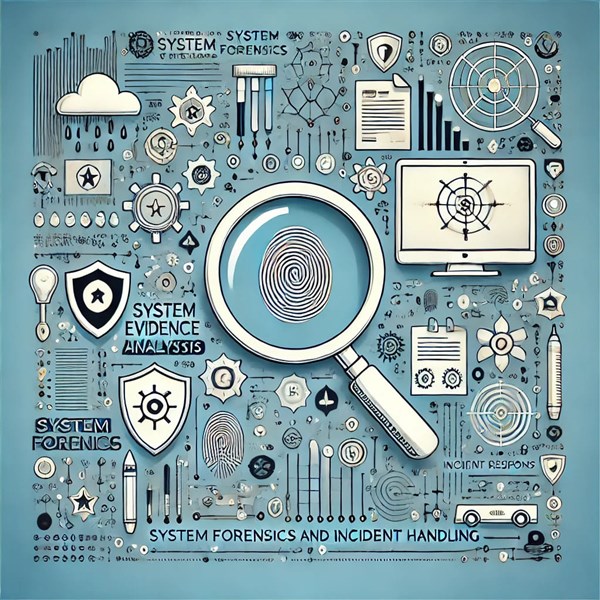
In a world where cyberattacks are more frequent and sophisticated than ever, organizations must do more than just defend — they need to respond, investigate, and learn from every incident.
That’s where System Forensics and Incident Handling come in.
These two disciplines are foundational pillars of modern cybersecurity. Together, they help organizations uncover the cause of security breaches, respond to them effectively, and minimize future risks. But what exactly do they involve? Who uses them? And how can you start learning?
In this beginner-friendly guide, we’ll explore what system forensics and incident handling are, how they work, key tools and techniques, and how you can start building skills in this high-demand field.
🧠 What is System Forensics?
System forensics is the process of collecting, preserving, analyzing, and presenting digital evidence from computer systems and networks to determine what happened during a security incident or crime.
It’s a subset of digital forensics, specifically focused on operating systems, file systems, logs, memory, and applications on a host machine (e.g., servers, laptops, mobile devices).
Core Objectives:
- Preserve evidence for legal, compliance, or internal review
- Reconstruct digital events like unauthorized access, malware infections, or data theft
- Support investigations by law enforcement or corporate security teams
Common Forensic Sources:
- Hard drives and file systems
- Event and audit logs
- Registry entries (Windows)
- Memory dumps
- Browser and application artifacts
- Network traffic captures
🚨 What is Incident Handling?
Incident handling, also called incident response, is the structured approach to detecting, responding to, managing, and recovering from a cybersecurity incident.
Incidents can include:
- Malware infections
- Phishing attacks
- Unauthorized access
- Insider threats
- Ransomware
- Data breaches
Goals of Incident Handling:
- Minimize damage
- Restore operations
- Contain threats
- Collect intelligence
- Report the incident accurately
- Prevent recurrence
Together, system forensics and incident handling help organizations answer crucial questions like:
- What happened?
- When did it happen?
- How did it happen?
- Who was behind it?
- What data or systems were impacted?
🔁 The Relationship Between Forensics and Incident Handling
Think of incident handling as the emergency response team, and system forensics as the crime scene investigation.
During or after a cyberattack, incident handlers work to:
- Contain the threat
- Secure assets
- Communicate with stakeholders
At the same time, forensic analysts dive into:
- Logs
- Memory
- Files
- Network data
…to piece together what actually occurred.
These teams often work side-by-side to balance fast response with deep investigation.
🧰 Key Phases of Incident Handling
Incident handling typically follows a six-phase model, commonly outlined by NIST (National Institute of Standards and Technology):
1. Preparation
- Create incident response plans
- Set up monitoring tools
- Train staff
2. Identification
- Detect unusual or suspicious activity
- Classify the type of incident
3. Containment
- Isolate affected systems
- Prevent lateral movement
4. Eradication
- Remove malware or malicious accounts
- Fix vulnerabilities
5. Recovery
- Restore systems from backups
- Monitor for reinfection
6. Lessons Learned
- Conduct post-mortem analysis
- Update security policies
- Improve defenses
System forensics is especially useful during identification, containment, and lessons learned phases.
🧪 Popular Tools Used in System Forensics & Incident Handling
🔹 Disk & File Analysis
- FTK (Forensic Toolkit)
- Autopsy/Sleuth Kit
- EnCase
🔹 Memory Analysis
- Volatility Framework
- Rekall
🔹 Log Analysis
- Log2Timeline (Plaso)
- Event Viewer (Windows)
- Syslog Tools (Linux)
🔹 Network Forensics
- Wireshark
- tcpdump
- Zeek (formerly Bro)
🔹 Malware Analysis
- Cuckoo Sandbox
- VirusTotal
- IDA Pro
🔹 Incident Response Platforms
- TheHive
- Cortex
- MISP (Threat Intel Sharing)
Training in these tools is essential to build real-world skills.
🏁 Common Use Cases of System Forensics
-
Investigating Insider Threats
- Analyze file access patterns
- Review USB device logs
- Recover deleted data
- Ransomware Attack Analysis
- Examine payload and execution
- Track lateral movement
- Identify data exfiltration paths
- Extract IOCs (Indicators of Compromise)
- Analyze email headers and payloads
- Follow user behavior post-click
- Preserve evidence for legal cases
- Maintain chain of custody
- Generate reports for audits
- Phishing Attack Response
- Legal Compliance & eDiscovery
🧑💻 Who Needs These Skills?
System forensics and incident handling are critical for roles such as:
- Security Analysts
- Incident Responders
- Digital Forensics Investigators
- SOC Analysts
- Cybersecurity Engineers
- IT Admins & Sysadmins
Organizations in finance, healthcare, defense, retail, and critical infrastructure also require in-house or third-party professionals with these capabilities.
🎓 How to Start Learning System Forensics and Incident Handling
Here’s a suggested path for beginners:
1. Understand Operating Systems
- Focus on Windows and Linux internals
- Learn about file systems, registries, logs
2. Get Comfortable with CLI Tools
- Learn how to navigate file structures
- Use commands like grep, netstat, ps, lsof
3. Enroll in Courses
- SANS SEC504 (Hacker Tools, Techniques, Exploits)
- CHFI (Computer Hacking Forensic Investigator)
- Cybrary: Incident Handling & Response
- Coursera: Digital Forensics and Cybercrime
4. Practice in Labs
- Set up a virtual lab (VirtualBox, Kali Linux, Windows VM)
- Simulate incidents and investigate them
5. Join Communities
- Reddit: r/netsec, r/cybersecurity
- ForensicsWiki
- SANS Internet Storm Center
- LinkedIn Cybersecurity Groups
📈 Career Benefits of Learning Forensics & Incident Handling
- High demand: Cybersecurity job growth is exploding
- Lucrative salaries: Forensics and IR roles pay $90K–$140K+
- Challenging work: You’ll face new threats and puzzles every day
- Career mobility: Skills translate into roles in blue teams, threat hunting, compliance, and more
✅ Final Thoughts
System forensics and incident handling are no longer niche skills — they are essential components of any strong cybersecurity strategy. Whether you're starting a career in cyber or leveling up your current role, learning how to investigate, respond, and recover from incidents gives you a competitive edge in one of the most critical areas of IT today.
From reconstructing attack timelines to preserving evidence for legal review, these skills ensure that you not only survive cyber threats — you understand and outsmart them.
As the demand for professionals in this field continues to grow, so does the importance of having a recognized certification that demonstrates your skills and expertise. Incident Handling and Forensics Certification Training Courses offered by leading IT training companies like Koenig Solutions can equip you with the knowledge and practical skills you need to excel in this rapidly evolving field.





COMMENT